The Price of a Broken Heart
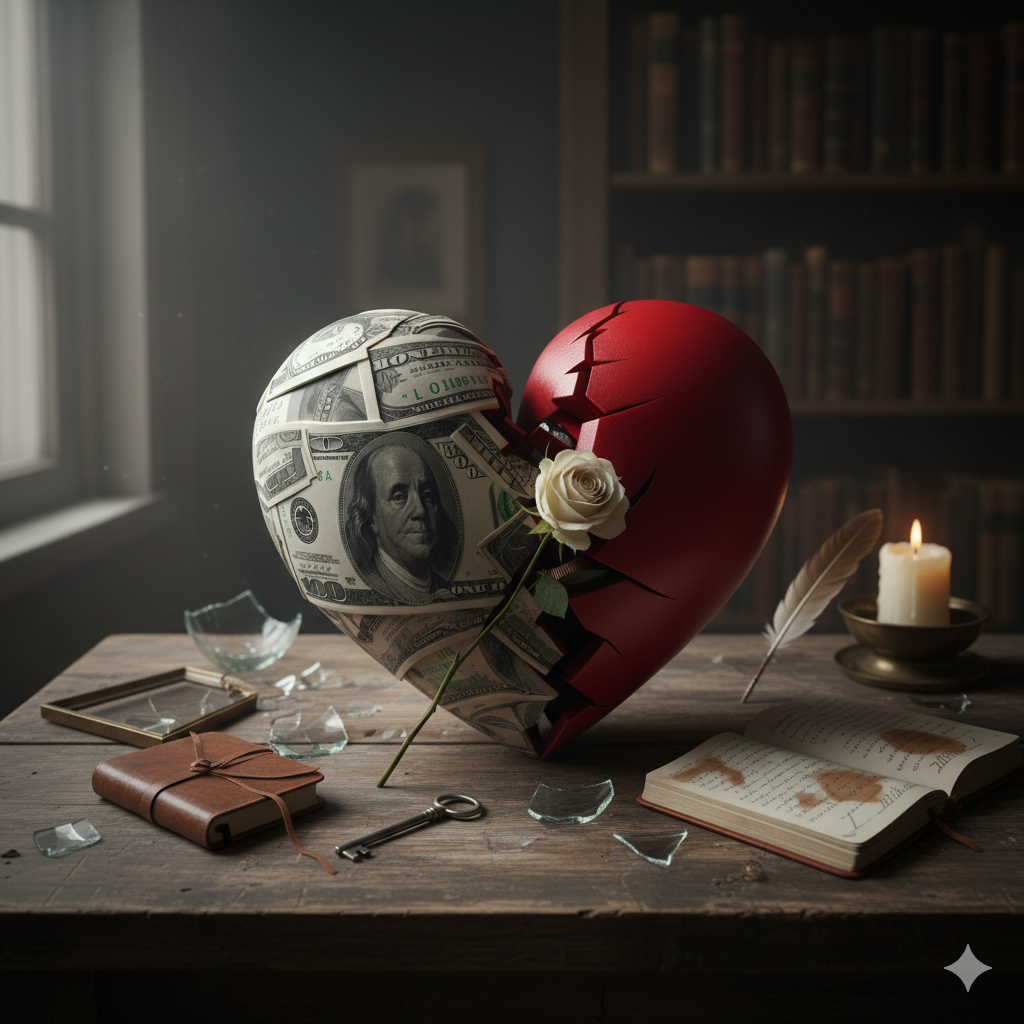
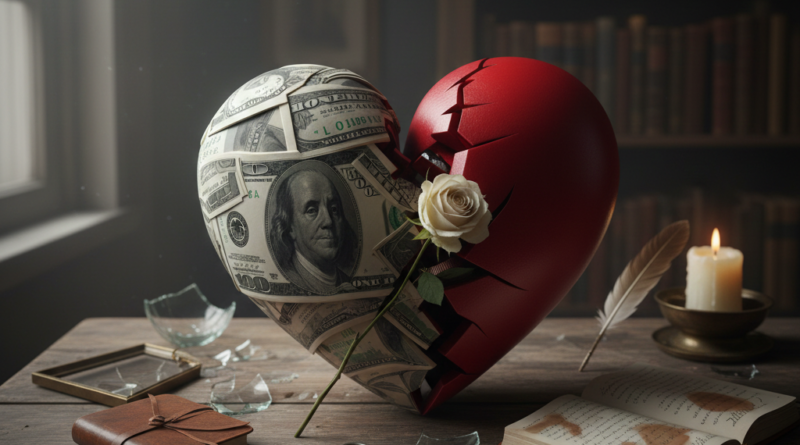
They found the heart on an old oak table in the back of the forgotten library, where dust turned sunlight into quiet gold. It was an impossible heart—half wrapped in hundred-dollar bills, the other half red and cracked like porcelain. A single white rose bloomed from its fault line, fragile yet stubborn, as if determined to root itself in pain.
Beside it lay a leather-bound journal, stained with tears the color of old ink. A silver key rested near a scatter of broken glass, waiting like a question nobody dared to ask. A candle flickered nearby, its tiny flame trembling every time the wind whispered through the cracked window.
Once, this heart had belonged to a poet.
He had loved a woman who measured worth in moments, not money—sunset walks, inside jokes, silence that felt safe. But the world was louder than love. It spoke in salaries, status, and expectations. And somewhere between dreams and rent, between promises and practicality, their love began to splinter.
He chased success the way others chased air, believing wealth would buy back time, affection, forgiveness. And while the money grew around him like armor, the red side of his heart fractured quietly under the weight of all he never said.
He poured his sorrow into the journal—poems, regrets, small apologies written too late—until the ink bled like rain. When words were no longer enough, he locked the last page with a key and left it beside the heart, as if hoping someone else might someday understand.
Legend says the heart remains there still, refusing to decay. The rose never wilts. The money never fades. The crack never heals.
Because some stories are not meant to be fixed.
They are meant to remind us:
Love is the only currency that increases when it is given away.
And once traded for anything less, even the richest heart can break.